Walt Disney was a master creator, entrepreneur, and visionary, and is considered one of the most prolific thinkers of the 20th century. With such lofty aspirations, Walt was constantly balancing many projects and responsibilities. The latest films in development. New innovations in animation. Redefining themed entertainment with Disneyland. His beloved family. Aspirations for a more perfect future society. You name it, Walt was thinking about it.
The demands of being Walt Disney became many, and far reaching. Earlier in his career, Walt spent most of his time and energy in Southern California, with a sole focus of making top quality animated short films and features. But as his studio grew, and his ideas blossomed in the 1950s and 1960s, Walt’s reach extended across the country – and even around the world. Walt needed to be in more places. Trains and commercial aircraft didn’t give Walt the mobility and flexibility required to achieve his growing goals. Walt needed a better way to move. He needed a private plane – one that allowed him the freedom to travel longer distances in a shorter time, and also gave him the privacy to progress some of his most ambitious projects.
The Mouse Takes Off
So it was in the 1960s that the Walt Disney Studios began using a private plane to transport Walt and others in his circle to locations far and wide across the country. Edward Ovalle, archivist manager at the Walt Disney Company, explains it well, stating “Walt’s plane allowed him to do something he couldn’t do while flying on commercial airlines: continue to conduct day-to-day business without the worry of another passenger overhearing his conversations regarding studio matters. He was free to discuss with his employees, Imagineers, and invited passengers anything in relation to movies, theme park attractions, and other ideas that had not yet been announced to the public.”
Walt became a frequent flyer of the friendly skies, and the studio adopted several planes in the 1960s to shuttle Walt around to his various ventures. The company’s first plane, used from 1963-1965, was a Beechcraft Queen Air. In 1965, a Beechcraft King Air replaced the Queen Air, and was used until 1967. But a plane purchased in 1964 became Walt’s most famous.
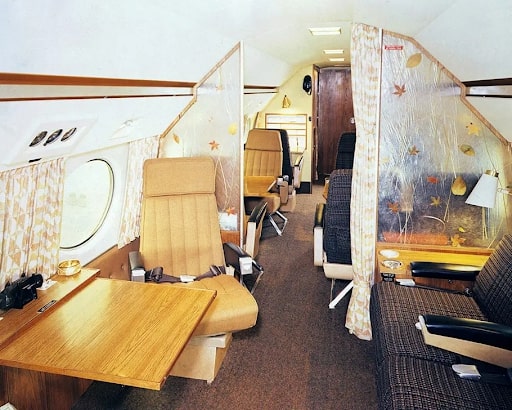
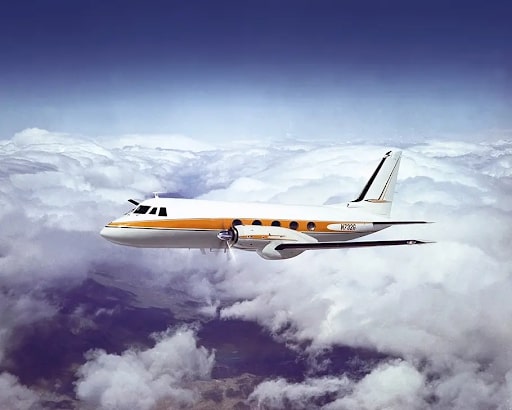
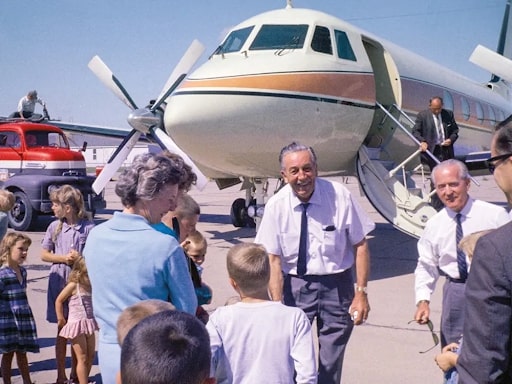
A Grumman Gulfstream I – often called “The Mouse” or “Mickey Mouse One” – served as a “studio in the sky” for Walt and his staff. This most iconic of Walt’s planes was painted white with orange and black stripes. Walt had the interior modified to include a galley kitchen, two restrooms, two couches, and a desk – a perfectly comfortable place to work while soaring above the clouds.
Ohhh – to be a fly on the wall inside Walt’s plane. The creativity, planning, and imagination were literally in the stratosphere! Those inspiring ideas and critical locations are stylized in a series of puzzles celebrating Walt’s plane and the destinations it saw carrying the inspiring visionary.
Let’s go for a trip around the country to the most critical places Walt’s plane flew.
Hollywood
The first of the five puzzles in the “Walt’s Plane” series is a 500-piece image blanketing the Hollywood Hills in Southern California (and with the primarily purple color scheme and starry/spotty design, this was easily the most difficult puzzle in the group).
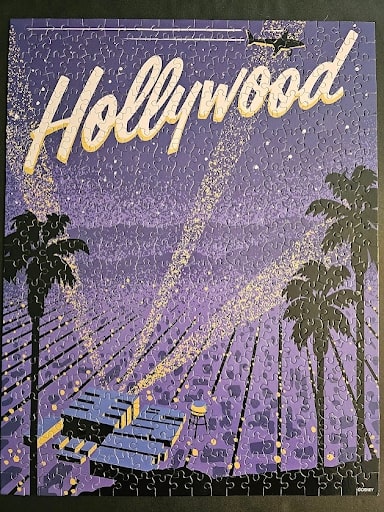
Of all the places associated with Walt, this may be the most obvious – it’s the place where he did his most memorable work in film and animation. Walt advanced the art of animation multiple times, with the first sound cartoon, the first full color cartoon, the first full-length animated feature, and the invention of the multi-plane camera, among others. Walt made his mark in live-action films as well – primarily out of Disney’s studios in Hollywood.
Walt was the first film producer to embrace television, at a time when other film studios viewed television as a threat to their business. Walt used the fledgling medium to leverage his ongoing film projects. And of course, he used television to introduce the country (and the world) to Disneyland in Anaheim (not too far from Hollywood).
By the late 1930s, Walt earned a status as one of Hollywood’s elite creators – both during his day and for many decades since. Walt Disney – both the man and the company – have long since been regarded as a gold standard in film and entertainment.
Palm Springs
Puzzle number two in the series is a 500-piece flight out of Palm Springs.
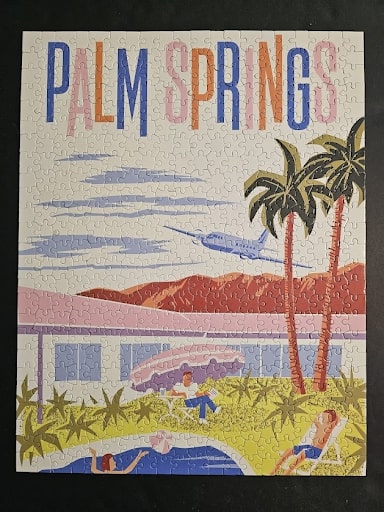
Located a couple hours outside of Hollywood – Palm Springs is the location of Walt’s Smoke Tree Ranch vacation homes. I say “homes” (plural) because Walt owned two different homes there, but not at the same time. Walt built his first home at Smoke Tree Ranch in 1949 when the Disney Studio was booming, but sold it in 1954 to fund his dream of Disneyland. Walt was so confident in his dynamic theme park idea that he put this home on the line to help make his dream a reality! After Disneyland proved successful, Walt built a second home at Smoke Tree Ranch in 1957, which he enjoyed with his family until he died in 1966.
During his time at Smoke Tree Ranch, Walt enjoyed horseback riding and lawn bowling. He loved Smoke Tree Ranch so much that he often boasted a “STR” logo on his neckties. Sharp-eyed visitors at Disneyland and Magic Kingdom will notice STR emblazoned on Walt’s tie in the “Partners” statue located in the Hub.
Fun Fact: When making his many trips around the country in Mickey Mouse One – Walt often flew out of Palm Springs International Airport instead of Los Angeles.
New Orleans
Next up in the series is a 300-piece trip to The Big Easy – New Orleans.
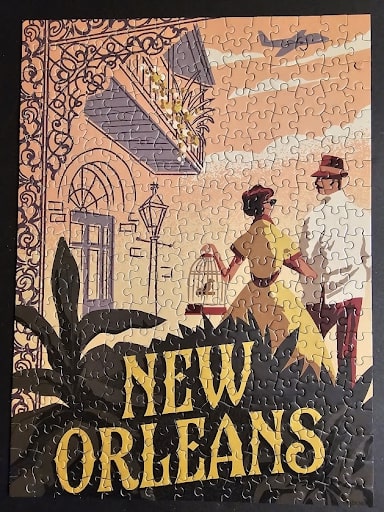
The overall puzzle image appears to lean into the jazzy Princess and the Frog vibe, but in reality, Walt was in love with the Crescent City long before Tiana was even a glimmer in Disney animators’ eyes.
Walt visited New Orleans frequently in the 1940s and 1950s. He especially loved the food and people of the city, so much so that he was proclaimed an honorary citizen in 1959.
In turn, Walt honored the city by creating the New Orleans Square land in Disneyland – complete with the iconic Haunted Mansion (with its southern plantation-style architectural design) and the Blue Bayou Restaurant.
But look closely at the little birdcage in the center of the puzzle image and you’ll see the biggest influence New Orleans had on Walt. During one of his visits to the city, Walt came upon a small mechanical bird in a curiosity shop. Fascinated by the figure’s animation, Walt purchased the bird, brought it back to the studio, and tasked his Imagineers with figuring out how it worked. Of course, what Walt really wanted was to create animated figures for Disney projects. That little bird was the dawn of Disney’s famed audio-animatronics!
New York
The fourth puzzle in the series is a 300-piece flight to the Big Apple.
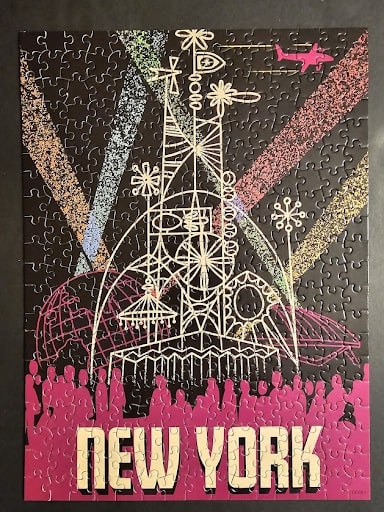
What significance does New York have with the Walt Disney Company? The most obvious answer to many may be the wealth of Disney films turned into successful Broadway shows. Beauty and the Beast. The Lion King. Aladdin. And the list goes on. But Walt never visited the Big Apple to see these renditions of blockbuster Disney films, as he passed away decades before Disney’s Broadway explosion.
When we look back in time to before Walt toured the country in his plane, we land on one of the most defining moments in Walt’s career (and his life!). It was in New York, in 1928, where Walt lost the ownership rights to his Oswald the Lucky Rabbit character – and most of his best animators – to producer Charles Mintz. Walt learned a hard lesson that day, and bounced back up off the floor to create the most famous and beloved animated character of all time – Mickey Mouse.
In between the birth of Mickey and the Broadway success, New York played a critical part in Walt’s evolution of theme park entertainment. Sponsors for the 1964-65 New York World’s Fair – and New York influencer and urban planner Rober Moses – were looking for top-notch entertainment offerings at the fair. Disney was the natural choice, and Walt agreed to develop four groundbreaking attractions, including the General Electric Carousel of Progress, Great Moments with Mr. Lincoln (for the state of Illinois), “it’s a small world” (for Pepsi), and Ford Magic Skyway.
Disney’s participation in the World’s Fair allowed Walt and his Imagineers to develop critical technology used to progress themed entertainment – including audio-animtronic figures and automated ride touring. Walt also used the Fair as a means to test the water for public appetite for another Disneyland-style park on the East Coast of the U.S. The brilliance of it all is that the Walt Disney Company got paid to do all of this research, and were also able to keep the attractions they created. It was a win in every sense of the word!
Looking at the puzzle image, you’ll see (in pink) the famous globe from the New York World’s Fair on the left. On the right (also in pink) is the General Electric Progressland Pavilion, which housed the Carousel of Progress. Rising in the center is the Tower of the Four Winds – a 120-foot-tall kinetic sculpture designed by Disney Legend Rolly Crump – which stood proudly outside the Pepsi-UNICEF pavilion housing “it’s a small world.”
The 1964-65 World’s Fair was the origin of many technologies used in Disney Parks and other theme parks around the world to this day.
Florida
Last up in the “Walt’s Plane” series is a 750-piece flight over the swamps of central Florida.
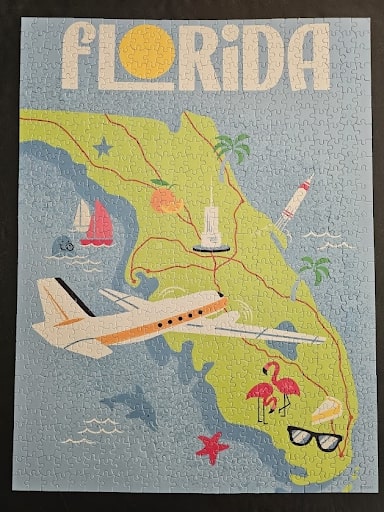
Walt and his trusted team were working overtime (and undercover) during what would be the final years of Walt’s life. Careful study pointed to Florida as the best place for Walt’s “Disney World.”
Mickey Mouse One flew Walt and his team to Florida many times while they scouted out the perfect property. Walt secretly bought all the land he needed (which is a fascinating story unto itself), and began planning what would become the most popular vacation destination in the world.
Unfortunately, Walt did not live long enough to see his dream become a reality. His ever-supportive brother Roy postponed his own retirement to spearhead the completion of Magic Kingdom, as well as the iconic Contemporary and Polynesian Village resort hotels. And in the ultimate moment of brotherly love, Roy insisted that the resort be named WALT Disney World, to forever honor his visionary brother.
If you’ve never seen that odd-looking building in the center of the puzzle, that’s because it was never built. The tower was envisioned by Walt to be the centerpiece of EPCOT – his Experimental Prototype Community of Tomorrow. Walt’s vision of a fully-functioning city of the future never quite came to be, though EPCOT was designed as a park to honor his visions – technology, progress, and a peaceful, understanding society.
Mickey Mouse One – Fueling Walt Disney’s Progress Nationwide
After Walt died in 1966, Disney continued to use his famous aircraft to transport executives and guests around the country. Over the course of more than two decades, “Walt’s Plane” made more than 8,000 flights as it traveled about five million miles across the United States, Canada, and Mexico. A total of 83,000 total passengers took to the skies onboard Mickey Mouse One, including Disney Legends Julie Andrews and Annette Funicello, and former U.S. presidents Richard Nixon, Jimmy Carter, and Ronald Reagan. The airplane’s original Federal Aviation Administration registration had been N732G. In 1967, the airplane’s original Federal Aviation Administration registration number was changed from N732G to N234MM, with the last two letters honoring the one and only Mickey Mouse.
The plane made cameos in a couple Disney films – The Computer Wore Tennis Shoes (1969) and Now You See Him, Now You Don’t (1972), both starring a very young Kurt Russell (now a Disney Legend).
Mickey Mouse One was retired in October 1992, and parked at what is now Disney’s Hollywood Studios in Orlando, Florida. For almost a decade and a half, until 2016, guests could spot the plane in studio backlot tours.
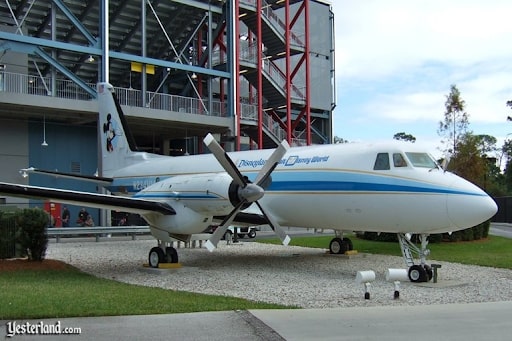
In 2022, Walt’s plane was moved to the Palm Springs Air Museum – appropriately located next to the airport Walt frequented for so many of his trips. On December 5, 2022, Becky Cline – director of the Walt Disney Archives – announced that the Palm Springs Air Museum, in conjunction with Phoenix Air, will restore and recreate the interior of the Gulfstream I to resemble what it looked like when Walt flew it in the 1960s.
Mickey Mouse One is truly a piece of Disney history, and the stories it could tell would satisfy the thirst of the most fervent Disney history buffs.
If you could take a flight anywhere in the world with Walt, where would you go (and more importantly, what would you ask him)?
Are you interested in taking a trip to Disneyland or Walt Disney World? How about an Adventures by Disney tour of Southern California to walk in some of Walt’s steps? Facts and Figment Vacation Planning can help you score the hardest reservations and best discounts Disney has to offer. Please start here to begin. Our travel planning services are absolutely FREE, and we can help you score the best, hardest-to-get deals to make your vacation more affordable.
Find Facts and Figment on social: Instagram Facebook X
Sources:
Mickey Mouse One – Dave Kindy, Air and Space Quarterly, January 3, 2024