Queue the music (you know how it goes).
Bum, bum, ba bum bum bum bum…
The 2026 Winter Olympic Games are upon us, bringing people from around the world together to celebrate friendly competition in the spirit of goodwill. This year, the Games will be hosted jointly by the Italian cities of Milan and Cortina d’Ampezzo, marking the first time two cities officially co-host the Winter Games.
As with every Olympics, this year’s Winter Games will be filled with sporting and cultural improvements, including the debut of ski mountaineering (“skimo”) and new events like women’s doubles luge, dual moguls, and mixed team skeleton (yikes, that sounds frightening!). Also this year, a staggering record 47% of all athletes will be female.
Innovation is also at the forefront of every Olympic Games. Sustainability efforts in Milan/Cortina will result in the use of 93% existing or temporary venues – reducing the need for significant new construction. Automated, high-efficiency snowmaking systems will reduce water and energy use by 30%. Perhaps most noteworthy in our current culture, AI will guide competition replays, drones, and cinematic storytelling for Olympic Broadcasting Services.
Some of the most engaging aspects of any Olympic Games are the stories behind the athletes. Every Olympics has at least one “darling” who captures the attention of the world, and many others earn the admiration of millions thanks to short biography videos and storytelling in the broadcast booth.
When it comes to innovation in storytelling, few people in the entertainment industry are as progressive as Walt Disney. Walt’s name is synonymous with cutting edge entertainment in animation, filmmaking, television, and theme park entertainment.
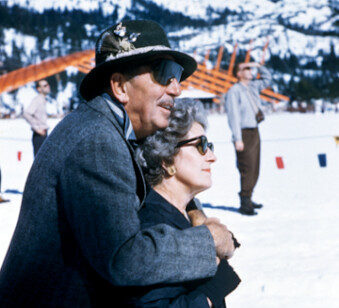
So when the 20th century’s most consummate showman was approached in 1958 by Olympic Organizing Committee President Prentis Hale about creating entertainment for the 1960 Winter Games in Squaw Valley, California, it was a challenge Walt couldn’t resist.
Let’s celebrate Walt Disney’s spectacular (albeit lesser known) contributions to Olympic history at the 1960 Squaw Valley Winter Games.
Walt’s Slopeside History
When most people think of Disney’s ties with winter, they immediately think of the 2019 film Frozen; and for good reason – the first two films in the growing franchise have grossed over $2.7 billion total to date. And that number does not even include merchandise, integration into the Disney Parks, and the franchise’s lasting impact on modern pop culture.
But Walt’s ties to winter sports go all the way back to the 1930s. While he admittedly was never a great skier, Walt enjoyed some time on the slopes. He and his young family occasionally vacationed at Badger Pass in Yosemite National Park, where they sharpened their skiing techniques under the tutelage of Austrian ski champion Hannes Schroll – head of the Yosemite Ski School.
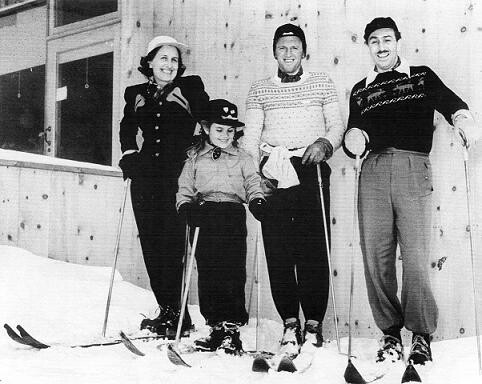
Walt and Schroll became good friends, and when Schroll wanted to build a ski resort of his own some years later, Walt funded some up-front money to help him get started. A few years later in 1939, when Schroll opened his Sugar Bowl ski resort, he renamed one of the resort’s peaks Mount Disney, in honor of Walt.
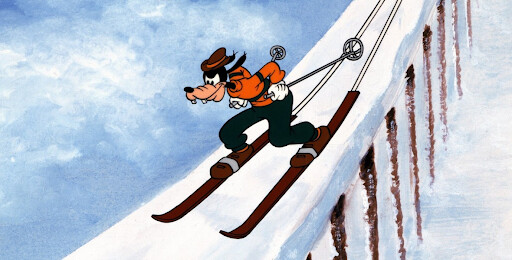
Walt’s skiing experiences with Schroll also inspired the classic 1941 animated short The Art of Skiing – starring the lovably clumsy Goofy. Schroll’s beloved Sugar Bowl Resort even made a cameo appearance in the film. Fun Fact: Schroll was also an accomplished yodeler, and he is immortalized in Disney lore as the voice of Goofy’s famous “Yaaaaaaa-hoo-hoo-hoo-hooey” holler.
Across the pond in the European Alps, Walt envisioned his idea for Disneyland’s Matterhorn Mountain. The Disney film Third Man on the Mountain was filmed in Zermatt, Switzerland, at the foot of the Matterhorn itself. It was while on that filming set that Walt decided he wanted a mini-Matterhorn of his own, which rose in Disneyland in 1959.
Squaw Valley – The Little Ski Lodge That Could
The story of the 1960 Squaw Valley Winter Olympics began with the enterprising Alexander Cushing – a landowner in a largely uninhabited valley in California overlooking Lake Tahoe. Cushing owned a simple ski resort, consisting of a single chairlift, two tow-ropes, and a 50-room lodge. He dreamed of transforming his small operation into a world-class winter sports destination.
When Cushing read a December 1954 newspaper article on the race to host the 1960 Olympic Winter Games, he seized the opportunity. Despite facing competition from larger neighboring ski resorts in Reno, Nevada and Anchorage, Alaska, Cushing decided that he should throw his hat into the ring.
Against all odds, Cushing’s venture advanced to the final stage of voting to face off against a bid from Innsbruck, Austria. Squaw Valley won the rights to the upcoming 1960 Winter Games by narrowest of margins, with the International Olympic Committee (IOC) awarding Squaw Valley 32 votes to Innsbruck’s 30 votes.
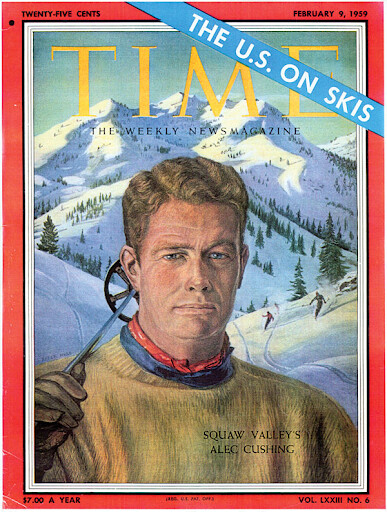
Before the excitement of the victory even had time to settle, a harsh reality set in. Squaw Valley, with its remote location and minimal existing infrastructure, would need to build everything from scratch to successfully host an Olympic Winter Games. The race against time was on.
Under the guidance of the new Olympic Organising Committee, chaired by Prentis Hale, the land belonging to Cushing was leased out and construction work on the new venues and infrastructure began. In the space of less than five years, Squaw Valley went from a largely undeveloped site to a fully equipped and accessible town – complete with roads, bridges, administrative buildings, hotels, motels, restaurants, a sewage network, an electric grid system, and a water treatment plant. Construction of a new terminal at Reno Airport in Nevada upgraded the airport to international status.
Essential Innovation
The development of a brand new Olympics-worthy venue brought with it a whole host of challenges, which in turn required progressive innovations. Just a few of the many innovations included construction of the first Olympic Village, artificial ice for many skating events, and timekeeping upgrades (improving scoring accuracy to 1/100th second).
Much-needed development funds were sourced by selling broadcast rights for the games, which CBS purchased for $50,000. CBS took their commitment seriously, improving filming and playback quality at the games. In fact, when the closing of the men’s slalom race appeared to be too close for officials to call, they requested that CBS television play back the video of the race in order to determine the victor conclusively. This gave birth to “instant replay” and inspired “slow-motion replay” now standard in sports worldwide. On-site sponsorship opportunities were offered for various venues and decor around the rising resort.
Disney’s Gold Medal Olympic Team
With the 1960 Squaw Valley Olympics gearing up to appear on the world stage, organizers sought star power from nearby Hollywood. And they looked no further than Walt Disney. With a resume full of storytelling imagination, Walt could provide the showmanship needed to elevate the 1960 Olympics to a true entertainment spectacle.
In 1958, Prentis Hale visited the Disney studio in Burbank and – after joining Walt for lunch – asked him to become Chairman of the Pageantry Committee for the upcoming Games. This role would involve programming the opening and closing ceremonies, victory ceremonies for each event, the Olympic torch relay, and other logistical tasks. Walt agreed, and was later quoted as saying, “I didn’t know then what I was getting into!”
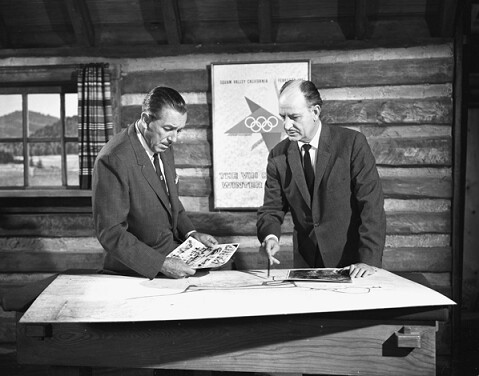
One of the strategies that made Walt most effective throughout his career was his ability to surround himself with talent in the areas where he needed it most. His involvement in the 1960 Winter Olympics was no different. Walt hand-picked his support team to make the most of his global opportunity, including the following key members:
- Ron Miller – Assistant Director at the studio and Walt’s son-in-law – as Pageantry Coordinator.
- Joseph McEveety – Another Assistant Director – as Olympic Torch Relay Director.
- Card Walker – Vice-President of Walt Disney Productions – as Director of Publicity.
- Art Linkletter – Television star and host of Disneyland’s 1955 live opening special – as Vice-President in Charge of Entertainment.
- Tommy Walker – Director of Customer Relations at Disneyland and former bandleader at the University of Southern California – as Pageantry Director.
- USC Choral Director Dr. Charles Hirt and UCLA Band Director Clarence Sawhill – supervising the musical aspects of production.
- John Hench – Disney artist and designer – as Decor Director.
With his team in place, Walt was poised to make a splash in the 1960 Winter Olympics.
Disney Magic at the Olympics
As Chairman of the Pageantry Committee, Walt’s duties included staging the opening and closing ceremonies, scheduling nightly entertainment for the athletes, and thematically outfitting the venue. Walt’s experience operating Disneyland made the Disney team ideal for also managing logistical details like parking arrangements, security, and ticketing. With Disney in charge of all the Olympic pageantry, Walt’s team got to work on building and planning a world-worthy program.
Venue and Sculptures
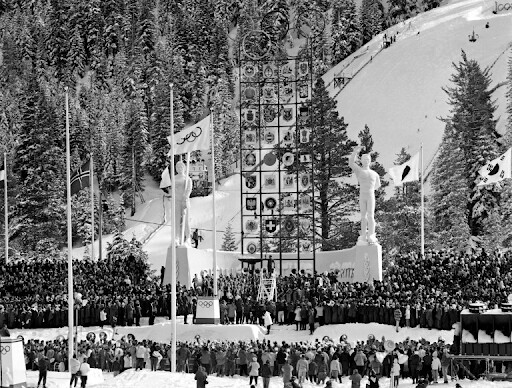
The pageantry of every Olympic Games starts and ends with the opening and closing ceremonies. The heart of both ceremonies at the 1960 Olympics was the awards stage, designed by Disney. Centered in the stage was the Tribune of Honor – a raised platform with the Olympic flame burning at its center. Immediately behind the Tribune of Honor stood the nearly 80-foot-tall Tower of Nations, designed by John Hench. The iconic Olympic rings and thirty aluminum crests – displaying the participating nations – were suspended upon the metallic grid which composed the Tower’s frame.
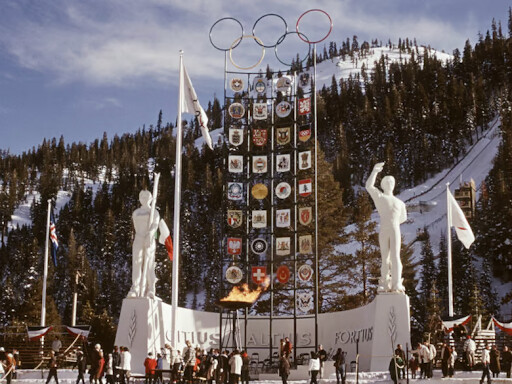
In addition to staging the opening and closing ceremonies, the Tower also functioned as the backdrop for individual medal ceremonies for each competition. This was another innovation for the Olympic Games, as victory ceremonies had not always previously been held for public viewing. Flanking each side of the Tower were two giant 24-foot-tall statues – one man and one woman.
Walt suggested the creation on an “Avenue of the Athletes,” inspired by the ancient Greek custom of commemorating Olympic champions with marble sculptures. At Walt’s recommendation, Hench designed thirty 16-foot-tall “snow” statues – nine female and 21 male – representing various winter Olympic sports such as hockey, skiing, and skating, to stand along the Avenue of the Athletes and in other locations throughout the venue.
Pomp and Circumstance
Anyone who has ever visited a Disney theme park knows how well Disney does parades. For the opening ceremonies, Walt’s team put together a spectacle enjoyed not just in Squaw Valley, but around the world. For starters, Disney’s choral and band directors selected 18 bands and 37 choruses from high schools located in California and Nevada to perform in front of the world. With the Games held on a limited entertainment budget, the students had to raise their own funds in order to attend. But it was an experience worth the effort.
Walt considered youth participation to be critical to the success of the Games, proudly stating “I have always said that the spirit of American youth cannot be daunted, and I think this was dramatically proven by their unselfish and wholehearted effort before and during the VIII Olympic Winter Games.” To that end, some 125 Explorer Scouts – under the leadership of a local Scoutmaster – acted as official flag-raisers, messengers, and crowd control during the opening ceremonies.
Blizzard Conditions
At long last, opening day for the Olympics arrived on February 18th, 1960. But the Olympics didn’t arrive quietly – Walt and his staff, and everyone else on-site for the opening ceremonies, woke up to blizzard conditions which dropped ten inches of snow that morning. The whiteout conditions threatened to derail the ceremony, which was scheduled to begin at 10 AM. With Squaw Valley still being such a remote location, travel to and from the resort would be perilous in the snow. Guests would struggle to make the trip, and television crews and other organizers would have a hard time managing their equipment in the harsh conditions.
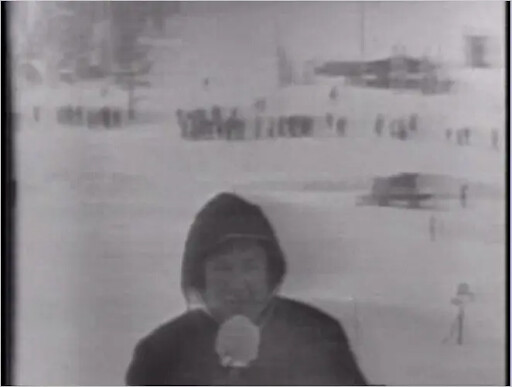
Image: CBS
CBS host Walter Cronkite was essentially broadcasting from a frozen tundra. Many of the high school musicians stood freezing with their instruments during dress rehearsal. The pigeon trainers almost refused to release their “doves” in such terrible weather. Vice President Richard Nixon, who was scheduled to proclaim the opening of the games, had trouble making it to the resort as planned. Instead of flying in via helicopter, Nixon had to drive in from Reno.
The television folks urged Walt to move the ceremony indoors, as it would make for easier accommodation and more comfortable management of the broadcasting equipment. But Walt and his team had put so much time and effort into the outdoor event – not to mention all the young musicians who traveled in to perform and were waiting in place outside. In his typical optimistic manner, Walt remained unfazed and optimistic, believing the skies would somehow clear.
And clear, they did! The snow ceased and the clouds parted, allowing for a miraculous brief glimpse of the sun. After a minor 15-minute delay, the ceremony was underway.
The Show Goes On
The festivities began with a sustained drum roll and the raising of the thirty national flags, as the United States Marine Band played “The Parade of the Olympians.” All 665 athletes then entered the arena, with each national delegation celebrated with a display of fireworks. This was advertised as the first-ever use of daytime fireworks, a Disney tradition that continues in the theme parks today.
Prentiss Hale delivered an opening speech, and Vice President Nixon declared the Games open. The massed band and chorus joined the Marine Band in playing a newly-orchestrated Olympic Hymn. Two thousand Peace Doves (played by homing pigeons) were released, followed by an eight-round cannon salute.
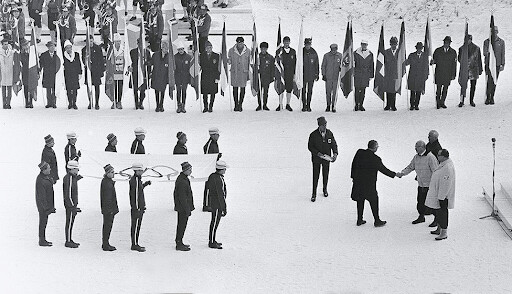
Last but not least, the Olympic torch arrived to light the flame and begin the Games. Olympic ski champion Andrea Mead Lawrence blazed down the slopes accompanied by an honor guard of eight skiers to deliver the torch to Olympic speed skater Kenneth Henry, who lit the flame upon the Tribune of Honor.
Many folks marveled at the good fortune of the opening ceremony, given the treacherous weather all morning leading up to the event. Even the Russian contingent – participating in the Olympics at the height of the Cold War – were impressed. One of the heads of the Russian delegation openly wondered what chemicals had been used to control the weather during the opening ceremony. When asked by his friend Ark Linkletter how he was able to pull it off, Walt simply replied “It’s just that if you live right, things happen the way they’re supposed to.”
About That Olympic Torch
The relay of the torch and the Lighting of the flame for the Games is one of the most iconic and cherished Olympic traditions. Did you know that the torch – while modeled after previous Olympic torches – was modified by John Hench for the 1960 Games? Hench made the torch slightly smaller than previous versions, to make it easier for torchbearers to carry. Earlier, taller models proved difficult for torchbearers to manipulate, as they were top heavy when filled with fuel. Hench also added black tape to the top part of the torch’s shaft to help runners pass the torch easily, and to ensure a more stable grip during the journey. Future Olympic torches would continue to make their own design changes, though most still demonstrate influence from Hench’s 1960 model.
Be Our Guests
The Olympic Village was not just a place for the athletes to stay – it was a place for Walt to play! The entertainment Walt brought to the Games didn’t end with the official ceremonies – it continued throughout the entirety of the eleven-day event. The 1960 Olympics were the first to be scheduled with live entertainment planned specifically for the athletes. Of his plan, Walt proudly proclaimed that “nothing is more important than creating lasting goodwill among our visitors, and we shall do everything we can to make their stay a happy one.”
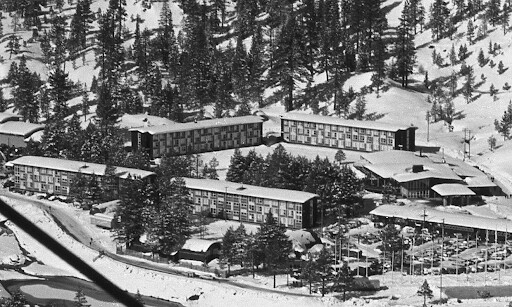
Image: Snow Sports Museum
Walt and Linkletter invited a “who’s-who” list of Hollywood friends every evening to entertain the athletes. Bing Crosby, Roy Rogers, Red Skelton, Jack Benny, Marlene Dietrich, Jayne Mansfield, and Danny Kaye all stopped by to perform and meet and greet with the athletes in the evenings. Films and refreshments were also provided every night. Walt even brought the cast of Disneyland’s Golden Horseshoe Revue to put on a raucous show for the athletes.
Last but certainly not least was one seemingly small gesture that made a big impact with the athletes. With the athletes being completely focused on their own sports by day, they rarely got to see other athletes be awarded their medals. So every evening, at Walt’s direction, Art Linkletter would introduce the new champions who had won medals that day. Having spent well over a week together, many athletes got to know each other quite well, and they very much appreciated the opportunity to celebrate the accomplishments of their newfound friends.
Overall, the 665 athletes – representing 30 countries – took part in the 1960 Winter Olympic Games. The athletes and guests enjoyed their experience. Disney’s participation in the Olympics earned high praise, being called “the greatest games ever staged” and even “the greatest show on Earth.”
Beyond the Olympics
Walt was ever the innovator, and was always looking forward to the “next big thing.” His experience and success at the 1960 Winter Olympics fueled other ventures – one of which brought him worldwide fame, and the other which never came to be.
1964-65 New York World’s Fair
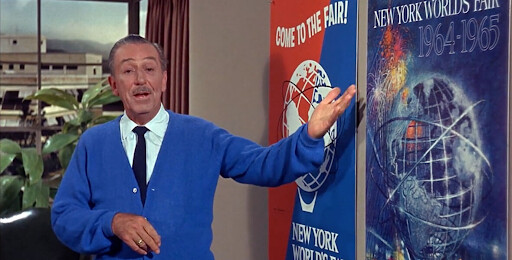
In chairing the Olympic Games, Walt effectively introduced himself to the rest of the world outside America. So when organizers for the 1964 World’s Fair in New York wanted to add a little extra pizazz to the Fair, they came calling for Walt Disney. In the space of less than a year, Walt and his talented team created four world-class attractions for the fair – “it’s a small world” for Pepsi/UNICEF, Ford Magic Skyway for the Ford Motor Company, Carousel of Progress for General Electric, and Great Moments with Mr. Lincoln for the State of Illinois. Disney’s contributions to the 1964 World’s Fair created technology and innovations that served Disneyland at the time, and continue to inspire theme park innovations to this day.
Mineral King Ski Resort
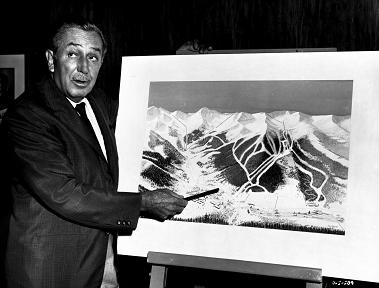
Not too far from the site of the 1960 Winter Olympics, Walt pursued the creation of a ski resort of his very own in Mineral King, California. Surrounded on three sides by Sequoia National Park, Mineral King was envisioned by Walt to be a winter wonderland at the base of the picturesque valley. Walt envisioned a ski center with 22 ski lifts and a gondola system that would connect eight mountain peaks above a resort village. In addition to a collection of ski slopes spanning a 3,700-foot vertical drop, Mineral King would also include a 1,000-room five-story hotel, movie theater, general store, pools, ice rinks, tennis courts, and a golf course.
Unfortunately, Walt did not live to see the creation of Mineral King. Amid growing opposition from environmental groups, and without Walt to champion the romance of the resort, the project ran out of steam and never came to be. But guests in Walt Disney World’s Magic Kingdom can enjoy a bit of Walt’s dream, courtesy of the Country Bear Jamboree – an attraction once conceived by Disney Legend Marc Davis as entertainment for the Mineral King resort.
Olympic “Firsts” and Innovations At a Glance
All told, the 1960 Winter Olympics in Squaw Valley proved full of optimism and innovation. We’ve discussed many of the “firsts” that were created during this landmark Winter Games – they make quite a long list:
- The Squaw Valley Olympics were the first to create an Olympic Village to house athletes on-site, complete with entertainment provided by Walt Disney specifically for the athletes.
- To offset tens of millions of dollars in construction costs of building a world-class Olympic venue from scratch, the Squaw Valley project inventively secured sponsorship money from corporations, cities, and individuals to sponsor everything from flagpoles and snow sculptures to sports equipment and cigarettes.
- Artificial ice was used for the first time in Olympic history, for the skating events.
- Waste heat from the on-site refrigeration plant was used to heat buildings, provide hot water, and melt snow from roofs.
- This was the first Olympic Games to sell exclusive television rights, which CBS purchased for a cool $50,000 (this proved to be such a brilliant source of funding that the Summer Olympics, held just a few months later, cost CBS close to $400,000 for similar television rights).
- As part of their television coverage, CBS introduced the instant replay, which paved the way for another key feature of modern-day sports broadcasting: the slow-motion replay.
- New and improved timekeeping equipment was introduced for the games, capable of measuring time to the hundredth of a second.
- Medal ceremonies for each competition were conducted for public viewing (they were previously contained in private ceremonies).
- This was the first Winter Olympics to feature a release of doves at the opening ceremony (though they were actually homing pigeons – recruited to play the role of doves and trained to return to safety following the ceremony, and not freeze in the mountain temperatures).
- The opening ceremonies advertised the first-ever use of daytime fireworks (a Disney tradition that continues in the theme parks today).
- American figure skater Carol Heiss became the first female Olympian in history to recite the Olympic oath.
- The Olympic torch was redesigned by Disney Legend John Hench to be smaller and more manageable for the torchbearers to handle.
Olympic Trivia
- Where’s the Bobsled? – The 1960 Winter Olympics in Squaw Valley was the only Winter Games that did not feature a bobsled event. With the high cost of building an entire Olympic venue being as challenging as it was, the organizing committee decided against building the costly artificial ice track. Every other Winter Games has featured the bobsled as part of the sporting events.
- New Events – While bobsledding may have been absent, two other sports made their Olympic debuts in Squaw Valley, including the biathlon and women’s speed skating. This made a total of eight sports in the 1960 Winter Games, taking the number of Olympic Winter sports to eight (alongside ice hockey, figure skating, cross country skiing, Alpine skiing, Nordic combined, and ski jumping). There were 27 total events in 1960.
- Opening Ceremonies – The 1960 Winter Games featured a cast of 5,000, a fireworks display, the release of 2,000 doves, eight ceremonial cannon shots fired in salute of the eight Olympic Winter Games held to date, and the very first performance of the Olympic hymn.
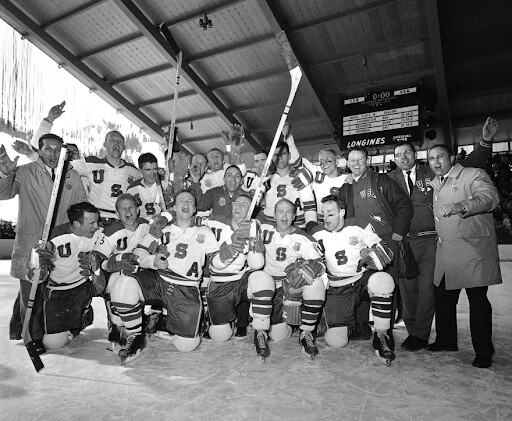
- Forgotten Miracle – Most people recognize the U.S. men’s hockey team’s “Miracle on Ice” victory over the Soviet Union in 1980 as the first time the U.S. defeated the Soviet Union in Olympic play. However, the 1960 U.S. men’s team also beat the Soviet Union in the medal round, en route to a gold medal tournament win. This victory is sometimes remembered as the “Forgotten Miracle.”
Sources:
- Crawford, Michael (January 18, 2012). “New Heights: Walt and the Winter Olympics”. The Walt Disney Family Museum.
- Carnahan, Alyssa (July 31, 2021). “Look Closer: The Olympic Torch”. The Walt Disney Family Museum.
- “Squaw Valley 1960: How it all began”. Olympics.com – Milano-Cortina. Retrieved January 27, 2026
- Smith, James (November 1, 2021). “Mineral King: A Disney Dream in the Sequoias”. Facts and Figment.
- Pepper, Jeffrey (January 16, 2012). “New Heights: Mount Disney and Sugar Bowl”. The Walt Disney Family Museum.
- David Antonucci (March 28, 2012). “Olympic Village: A Transformation”. Excerpt from “Snowball’s Chance: The Story of the 1960 Olympic Winter Games Squaw Valley & Lake Tahoe” retrieved from Snow Sports Museum.
Add to the conversation with a message on social media!